A day in my life as a nganya conductor by Rochelle Juma

The Editors
Contributor
Published in Qwani 04
-
The alarm goes off at 4:45 a.m., and I’m struggling to get out of bed. Only five hours of sleep after stumbling home at 11:00 p.m. At least I get paid daily—I hype myself up as I drag into the shower. Thirty minutes later, my driver JJ is already blowing up my phone—we’re late! I only have 10 minutes to get to the petrol station where our “beast” rests.
Ama niite Jonte anishikie hii squad ya kwanza nilale kidogo? I think to myself. But JJ won’t let that slide—our morning clients don’t recognize Jonte, even though he’s worked with me a couple of times.
By 5:30 a.m., I’m at the petrol station. A few nganyas are already leaving for the stage. That’s the only time we’re friendly with rival crews; once the day starts, we go back to being competitors. I jump into the driver’s seat to select a proper gospel playlist for the trip. At 6:15 a.m., the bus is full and we’re off towards Thika Road, it’s smooth, no traffic. By 6:58 a.m., we’ve dropped off our first squad.
We head back to Komarock, and this time I catch some sleep since another intern conductor has joined us and can keep JJ company. But at 7:15 a.m., the corporate and early morning clients start calling. My phone barely breathes- calls come in seconds apart:
“Sasa, please book for me a seat.”
“Hey bro, naeza kuja kupandia Umo before ufike?”
“Morning, leo hukunipigia ukitoka town. Tuko wengi, niece kiti!”
About eight people want me to book them seats. JJ also has his “first lady” for this squad who insists on sitting beside him—and let’s not forget mine. The rumors are true: date a conductor at the risk of your heart. We’ve got a couple of mat babes depending on the squad and time, and every day I risk adding a new one to my list.
By the time we reach Koma, the mat is already half full from passengers who boarded earlier. I switch the playlist to a mix of hip-hop and old-school RnB. These morning trips are the best: less hustle for me—just answering calls and alerting clients.
On the second trip, we’re back in town, then on our way to Koma again within an hour. This squad is when we “pay our dues” to the traffic police—if you know, you know. I also have to give the kamageras something small for filling the mat with passengers.
By the third trip, traffic is building and we have to hold on for dear life as the driver tries to navigate escaping the traffic. I’m short, so holding on to the non-existent rails while collecting fare is a struggle. My fellow conductor is busy navigating maps, directing JJ to routes with less traffic. At one point, we switch roads into town, but that costs me a cool 100 bob for the traffic marshals. Still, we drop off passengers by 9:30 a.m.—right on time.
The fourth trip is trickier: off-peak hours. Everyone in a rush is already in town, so we’re left persuading hesitant passengers. Here, the driver rests as I battle with rival conductors to fill our nganya. Off-peak rules? Mwenye mawe akae nyuma. Meaning if your matatu is less aesthetic—weak sound system, boring lights, poor speed- you step aside for the beasts.
Back to DJ duties, I queue up some fresh arbantone and Kenyan hits. These days, clients want local vibes, no room for Afrobeats or Amapiano. Finally, we fill up and roll to town. On arrival, we pay the sacco for all morning trips, then queue for Komarock passengers.
Two more trips later, rush hour kicks in. I switch the playlist to old-school dancehall and curated nganya mixes from top DJs. My phone won’t rest until 9:00 p.m. Luckily, we’ve got a charging spot in the cabin. Rush hour is a full-on rat race with other nganyas and that thrill is what reminds me why I love this job.
By now, more ‘conductors’ have joined us (they don’t officially work here,they probably came from school or work and love the thrill or want a free ride home so they stand at the door). Almost five of us are in the mat, hyping the driver and entertaining passengers as music also plays on our massive 60+ inch screens. From 4:30 p.m. to 8:30 p.m., we squeeze in four trips- serious money.
We finally decide to call it a day. At the petrol station, the rule is clear: full tank. Sacco managers are there to ensure no funny business. After fueling, we send money to the owner, then split the balance.
Since it was a good day, JJ takes home KSh 2,500, I get KSh 2,000, my deputy bags KSh 1,500, and the intern earns 500 bob. Everyone’s smiling, and we agree to be up early the next morning.
On my way home, I grab some fruits for my mum. Unlike other jobs, for us—every day is payday.
-
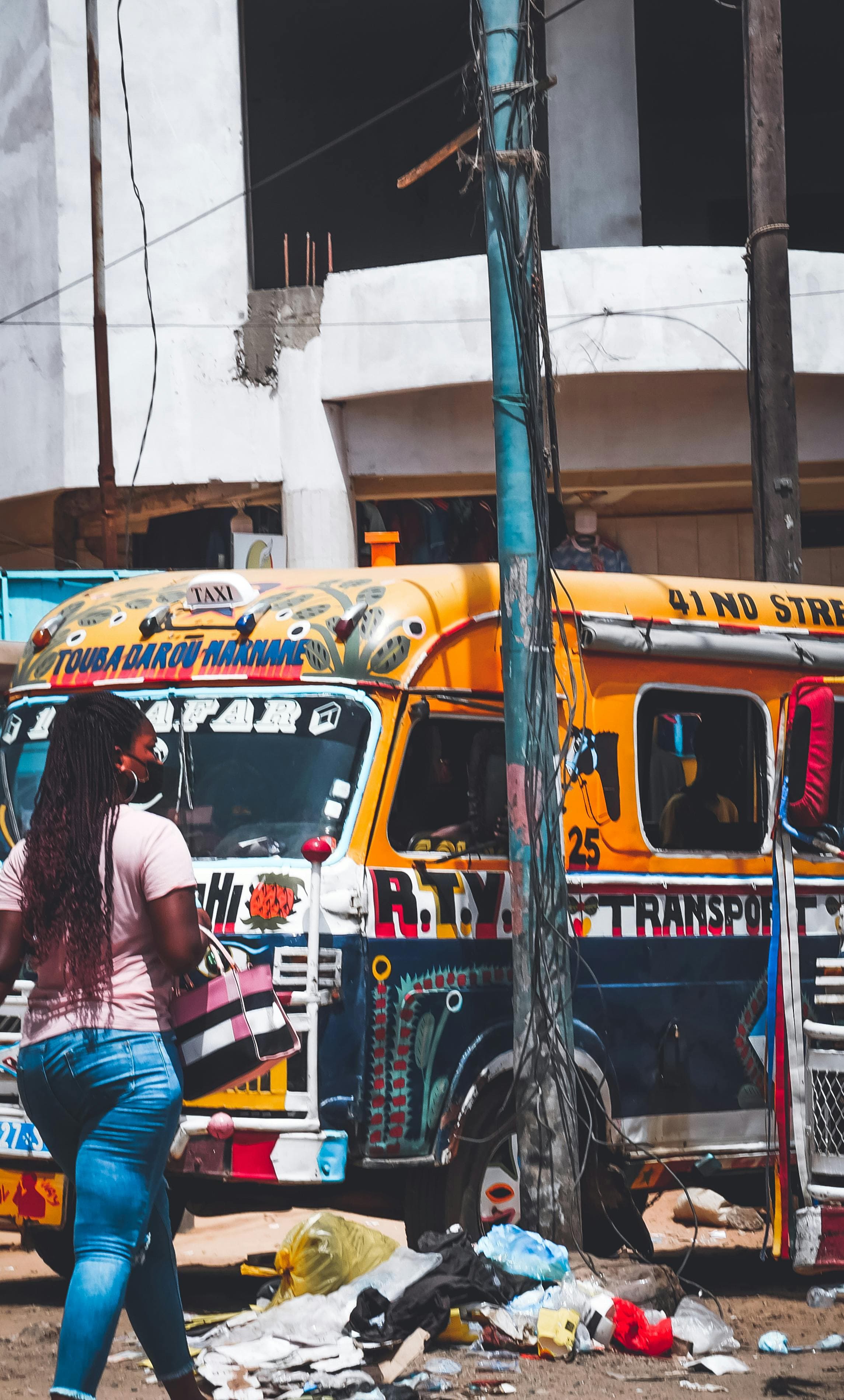
Photo by Papa birame Faye
Join the Conversation
(0 comments)Sign in to join the conversation
Share your thoughts and engage with our community