Therapy Sessions: A Conversation With Amanda Nechesa
The Editors
Contributor
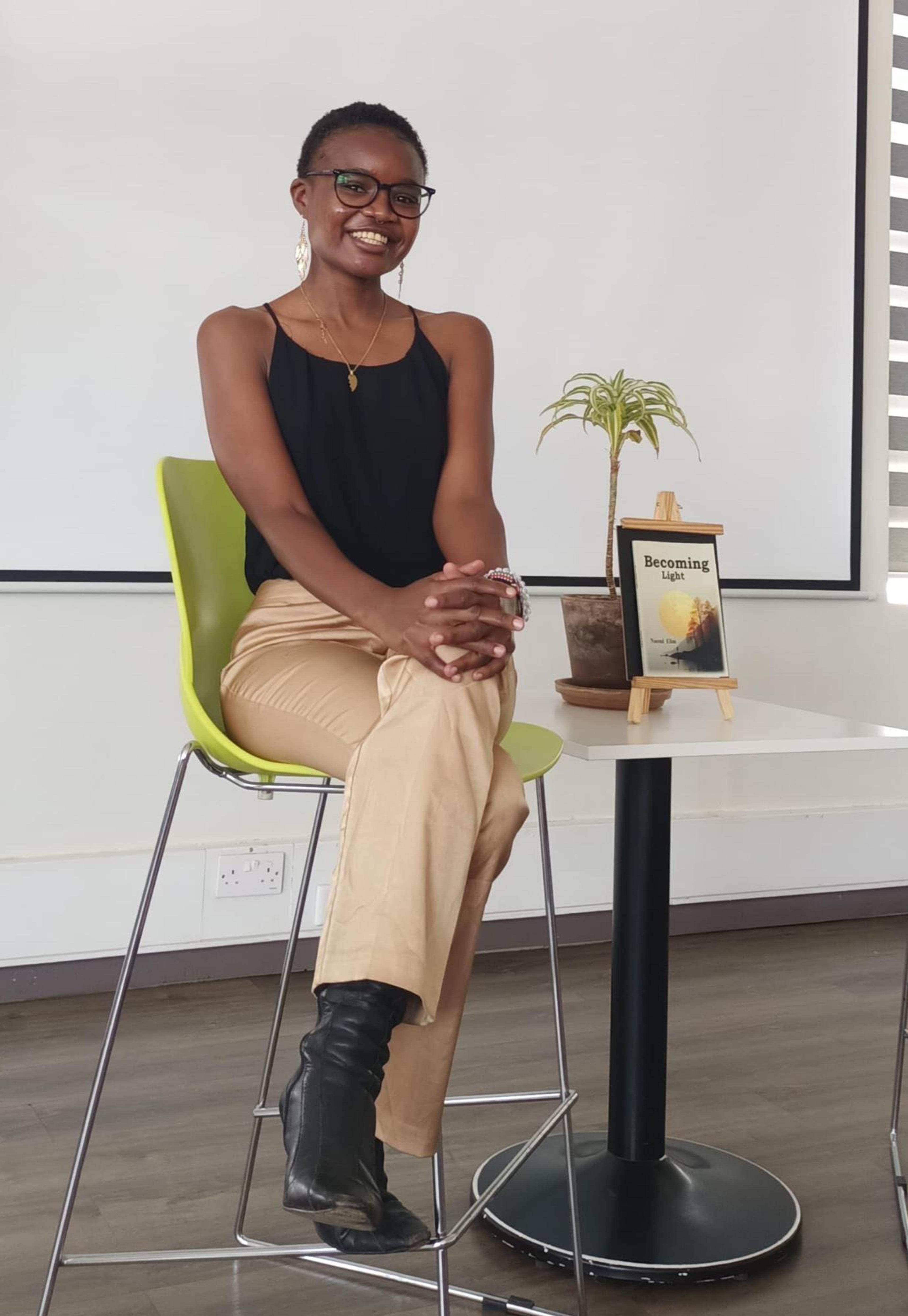
Amanda Nechesa is a Nairobi-based writer, poet, and feminist practitioner who uses literature and digital storytelling as tools for social transformation. Through her work, she seeks to amplify art and culture, challenge inequities, and explore the vulnerability of the human condition. Her work has appeared or is forthcoming in Brittle Paper, The Feminist Magazine, Isele Magazine,, Efiko Magazine, Kalahari Review, Lolwe, The Elephant, Voices Of The Revolution poetry anthology, and the first, second, and fourth editions of Qwani anthologies; among others. She is also the author of How To Make This Boy Go Home With Me (Qwani, 2025).
She is the founder of Therapy Sessions, a literary platform that explores personal development with a focus on Financial Literacy, Self-Love & Self-Worth, and Confidence (read: sexiness). Through Therapy Sessions, she hopes to impact many lives by introducing journaling as a powerful tool for self-reflection, healing, and intentional personal growth, encouraging people to better understand their relationship with money, themselves, and the world around them.
Q: You have recently launched Therapy Sessions salons. What inspired you to launch this platform, and why was it important for it to take the form of a salon?
A.N: I am not sure I would exactly call it a launch. The platform in itself, Therapy Sessions, has always existed. It’s been my substack for more than a year now, and when it started, and even now, the platform was just a way for me to find somewhere for my more personal writing to live. (But to be honest, all my writing is excruciatingly personal anyway). With Therapy Sessions, the substack more so, I wanted that urgency where I could write what I was feeling and publish immediately. Unlike with journals, where you could write something and wait for what seems like ages to see if you got accepted or rejected, I just needed to exorcise my thoughts fast and real, and I guess that’s how Therapy Sessions came about. It was my way of therapising myself every week.
The Salons are a different thing, because whereas the substack stemmed from this need to therapise myself, the salon is more like fostering conversations between people other than myself. It’s a space where I recognize: okay, I have this trauma, but person B also has this same trauma or a different one. How can I create a space where we can all heal communally? I don’t want to really call it a launch, though, because I have only done one event, which was focused on financial literacy. I am supposed to do the second one on Self-Love and Self-Care, so I am just taking it one event at a time.
Q: You have held one salon for Therapy Sessions so far. What have you learned about self-love and healing through this initiative? What impact has writing had on your healing journey?
A.N: Yes, I have only had one salon so far, and Thank Goodness it was successful. The event in itself confirmed what I thought was only in my mind, especially when it came to the guided journaling sessions, because that is what I was picturing when thinking about the salon. I wanted to prepare a sort of guidebook to allow people to journal their way into answers to personal questions they have. This was just an idea in my head at the time, and as I was thinking about it, I remember telling my best friend, I want to create an event where writing becomes a sort of healing mechanism.
So, in a sense, I wanted what writing has done to me all these years, how it has healed me, to do the same for other people.
I think that is what I have learned about self-love and healing. That if you want to, you can find healing literally anywhere. I mean, at the same salon, there was a grounding session led by Spontaneous The Poet, and I am sure for someone else, this session was the most healing. Then there was the gaming session, which was loud and interactive and connective, and I am sure for someone else, this was healing.
For me, writing is usually very healing because, as I said, I use it to exorcise my thoughts and feelings.
Q: What has the reception to the Therapy Sessions salons been like so far?
A.N: I mean, the reception has been wonderful. When I was thinking of the idea, I remember wanting an intimate setup. Like I literally wrote: I want to have twenty people in the Google Form I sent out. When the day of the event came, and I was looking at the sign up sheet, there were exactly twenty people, including me. So yeah, I would say sometimes what you put out into the universe comes to pass, and that is beautiful. All I can hope for is that the next one is successful and beautiful too.
Q: To pivot to another part of your writing journey, you have published essays, poems, short stories. Recently, you published an anthology, 'How to Make this Boy Go Home With Me'. A lot of your stories have to do with freedom, sexual freedom, and religious freedom. As a young writer, what does freedom do for your writing, and how does it affect your work? Are there ways you ever feel restricted in what you can talk about?
A.N: Oh, yes, thank you! Publishing HTMTBGHWM was a wonderful step in my journey. Honestly, I have to thank Qwani. I have the bragging rights of calling myself an author and that would not have been possible without them.
About freedom, I guess you are right. I do have a lot of stories that relate to freedom, to sexual freedom, especially. I guess religious or spiritual freedom just came into the picture recently, but sexual freedom has always been there. I recently came across some stuff I used to write way back in 2019, 2020, thereabouts, and I noticed that, true to the cause, I have always been trying to explore sexuality in a way. Romance and love, sure, and sometimes I would touch on politics, but sexuality is a bit of a constant. I don’t know why, to be honest. I guess that is the thing I am trying to figure out, too: what is it about sex that I am aching to say?
To answer your question on what freedom does to my writing, I would say it is the opposite. It is about what writing does to my freedom. I feel free when I write. When I don’t write for long periods of time, I literally feel sick. Like my arm is being cut off or something. It’s kind of a prison to depend on writing like this, but it’s also my freedom, in a way.
I guess I do feel like that because, in real life, I actually do feel very restricted in what I can talk about. In my family, we are not very free to talk about what is wrong, or right, or good, or bad. Or maybe I am not free to talk there, so even in my interactions, I struggle a lot with communication. What might seem obvious to someone to just communicate directly is not very easy for me, and it’s something I am working on, but boy, oh boy, I still falter.
But when it comes to writing! I could write everything and anything in between, without any inhibitions, and therein lies my freedom.
Join the Conversation
(0 comments)Sign in to join the conversation
Share your thoughts and engage with our community